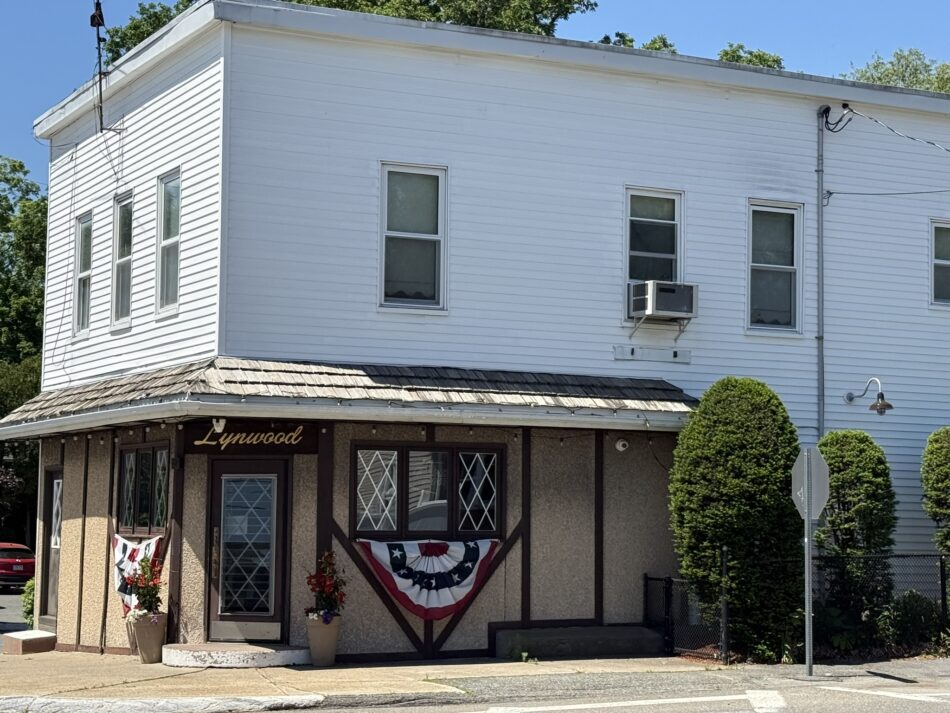
“I’ll go there for salad or a burger but not for pizza,” the waitress at Lynwood Cafe tells a customer about the new Town Spa, which she asserts has seen a decline in quality from its original glory since the move. It’s clear she says this not as a rival, but as a native. South Shore bar pizza – known locally as, well, “pizza” – stirs up passionate opinions borne of nostalgia and territorial pride, and if you’ve seen a decline in quality due to a change in location, it’s your duty to inform the uninitiated. “New” here is relative: the current Town Spa was built in the 1980s after they outgrew the original building. But most of the heavy hitters in the pizza game in the suburbs south of Boston and east of I-95 measure their lives in decades that stretch past the Dukakis era, back through the 60s and 70s when relative newcomers to the hall of fame like Venus Cafe and Poopsie’s were established and into the late 40s when bar pizza was invented and began to be dished out at places like Cape Cod Cafe and Lynwood (or the long-closed Tip Top Cafe in Brockton). The people who grew up here understand these churches and their denominations in their bones, and they don’t worship false idols.
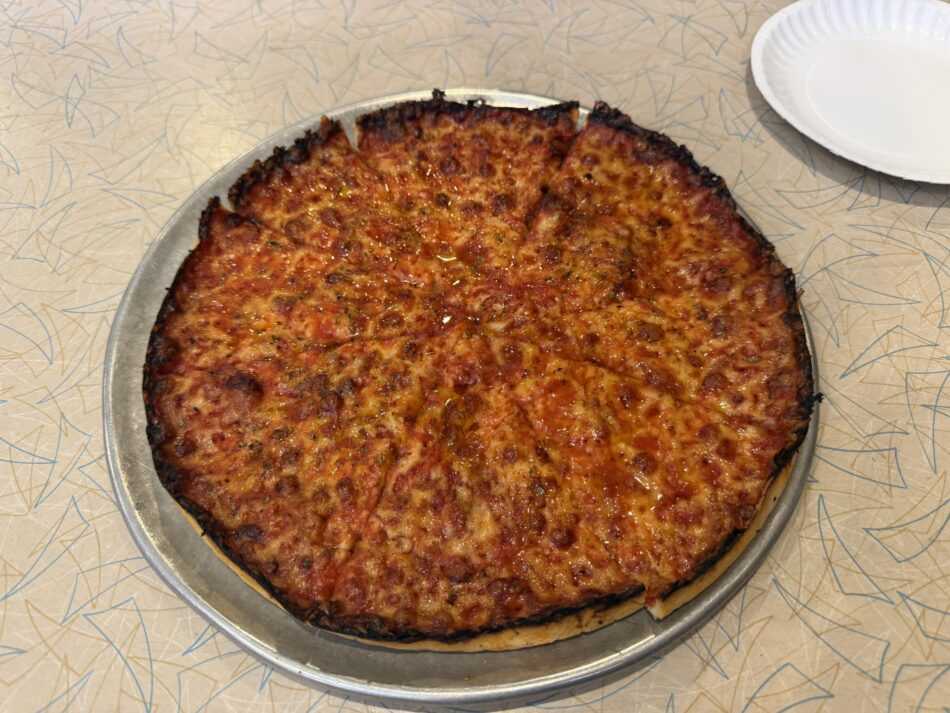
Even before you have settled on a favorite source, South Shore bar pizza demands affiliation. You are from the beginning either for or against this small puck, its forthright sauce and blasphemous cheddar spread to the limit so grip is reliant on the burnt edges to leverage a mini slice out of its tidy resting place. Forget Italian scripture, the chew-free crust would be laughed out of the Domino’s in Naples, FL, delicate and tender like a biscuit or tart shell, lacking in rise yet unusually hefty for a thin-crust pie. It’s topped with things that shouldn’t be on pizzas like beans and pickles and until recently it was packed in flat paper bags like an LP. There is nothing Italian about South Shore bar pizza, really, so to accept this affront is to cleave tradition from the object. Yet in spirit this might hew more closely to the platonic ideal than your average Neapolitan hipster pull. South Shore bar pizza isn’t finished with a sprinkling of fresh basil out of the Ooni; it is working class food, designed to be downed quickly with plenty of beer. It deviates from pizza law not because it consciously rebels but because its creators never stopped to consider the idea that someone might object to what they were cooking up for their customers, busy and tired and looking for simple sustenance in a third-space setting.
Until recently, the “cafes” that dotted the suburbs south of Boston were a regional quirk mostly familiar to those who had grown up around them, a small footnote in the pizza pantheon. The style gained a name (literally and figuratively) somewhere around the turn of the century, and tributes slowly began popping up in print and on menus here and there. Then a massive Facebook group began to build momentum during Covid and breweries discovered the pizza’s perfect nature as an accompaniment to their offerings. You no longer need to drop below I-93 to get a good bar pizza (though don’t tell the natives that), but the full experience still remains a South Shore exclusive.
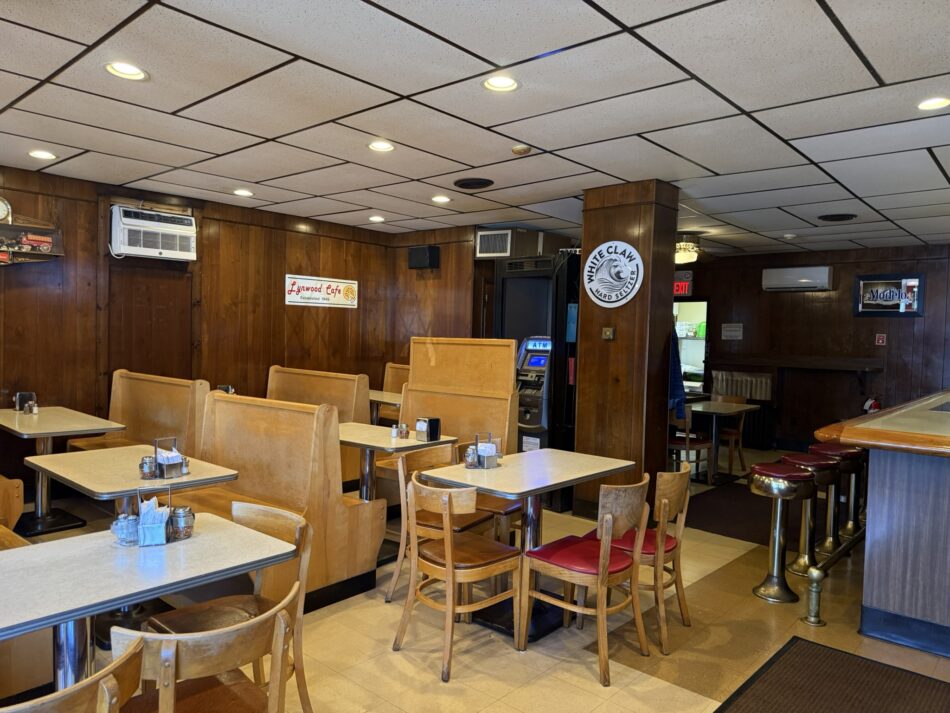
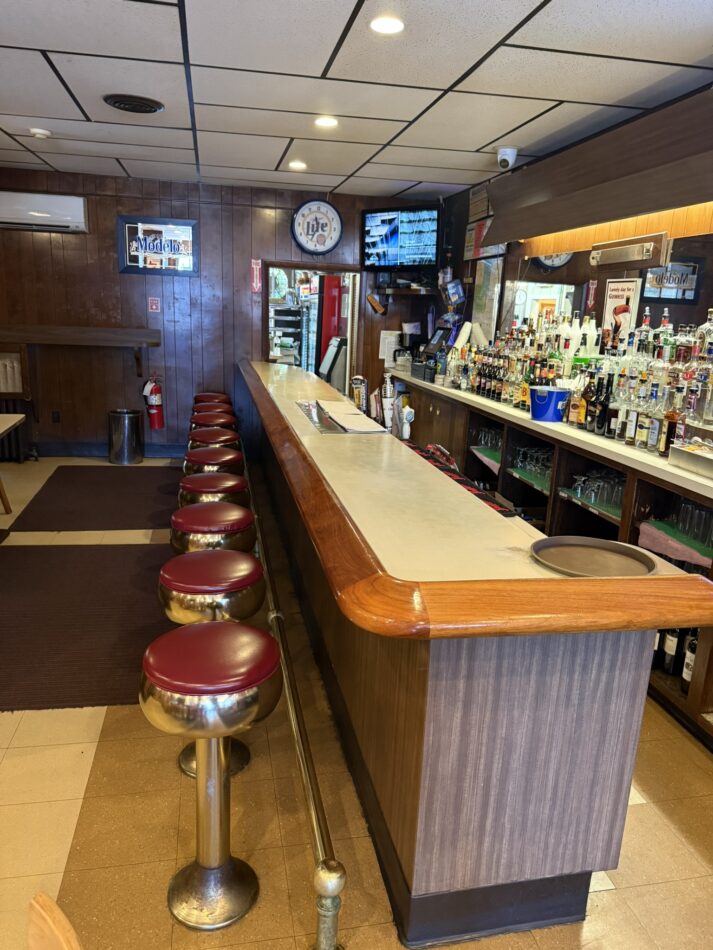
At Lynwood, they take this experience seriously. The only thing on the menu is pizza, and it’s served thirty to forty minutes after it’s ordered, as if they don’t open the bag of flour until the waitress gives the go-ahead. If you order properly, the pizza will arrive “laced,” the Lynwood’s term for the thin interlocking strands of frico that build up on the edges of the pizza where the cheese has hit the hot pan and caramelized to the verge of burnt (it’s referred to as the less poetic “burnt edges” at some classic competitors). The cheddar doesn’t melt like the mozzarella on a typical pizza, so the top of the pie is browned and slightly leathery yet still thin enough to be as yielding as the soft crust beneath it. It will come out piping hot and biting into this as soon as your mouth can take the heat is a good idea; while countless customers call ahead and sneak into the back entrance to pick up to-go pizzas, it’s best eaten straight out of the kitchen (and indeed many order “half-baked” pies that they can freeze or just finish off in the oven when they get home).
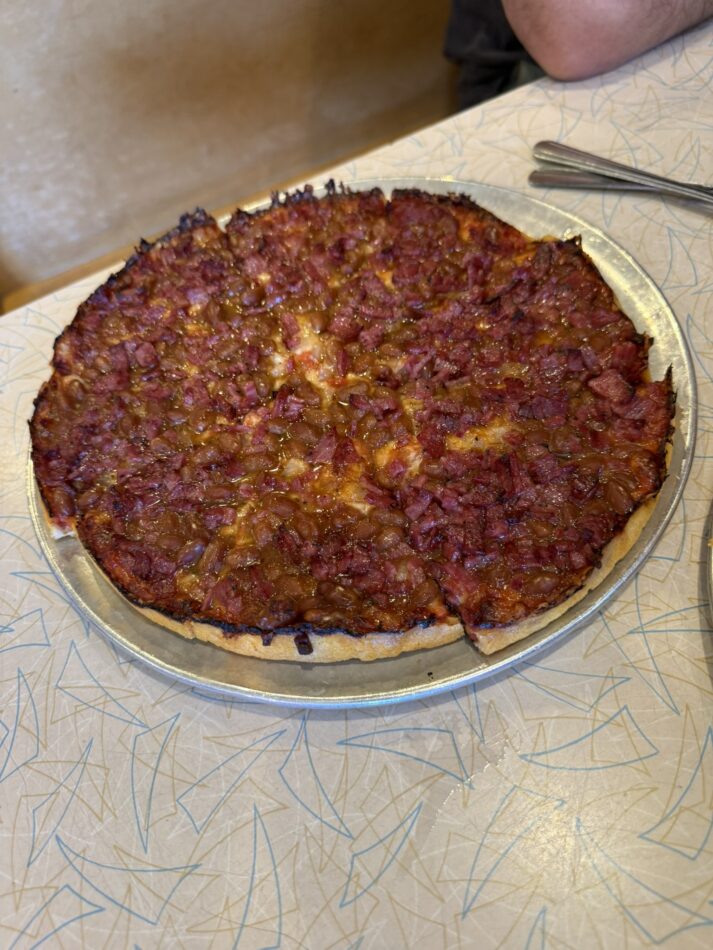
While Lynwood eschews newfangled toppings like buffalo chicken or hot honey jalapeño, they do make one unique offering to the pizza gods that demands attention. The bean special is topped with a uniform layer of baked beans and fine dices of salami and caramelized onion, a concoction that seems like it was thought up in some misguided Massachusetts tourist bureau brain-storming session. Trepidation is natural for any order of this pie, but no fear is necessary: this is one of the great inventions of bar food, supposedly created when the original owner topped a pizza with some of the frank and beans he had been eating for dinner as a late night snack. The sweet, smoky nature of the beans matches the saltiness of the salami, while the crust’s almost pastry-like consistency makes the full experience akin to a perfect empanada. Eating a slice of this pie is an experiment in mind-expansion that opens new avenues for pizzas everywhere to be their best selves.
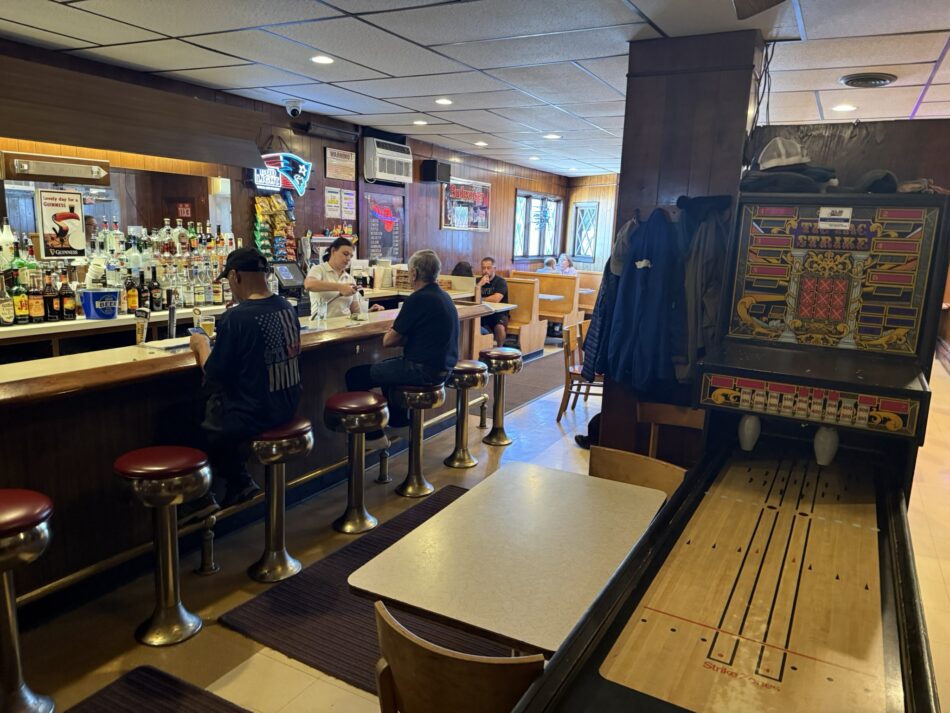
Making a stand for Lynwood above all other bar pizza is to charge unprotected into battle in a war that will never be settled, but it is also a flag planted firmly in the purist camp. Unlike the classic old-timers Town Spa or the Cape Cod, Lynwood serves only bar pizza, and they do so in the same stucco-fronted building with the same wood-paneled interior in which they began. There are pizzas more attuned to the modern palate, for better or worse. But when you go to Lynwood, you know you are getting the same thing that was pulled out of the oven 75 years ago, and in the same room, too. Biting into a pie here, you understand bar pizza and the culture that birthed it in a way that is impossible to replicate anywhere else. It’s a hill worth dying on.◼
About Lynwood Cafe
South Shore bar pizza was probably created in 1947 by E. James Jamoulis at the Cape Cod Cafe in Brockton (with potential collaboration from his partner Nick Nickolaow, whose family now runs Charlie’s Place in Wareham). There’s basically one thing that defines this pizza: a 10-inch round pan that is made by Bay State Restaurant Products Inc., a store located right down the street from the Cape Cod. The steel pan has a one-inch rim that rises straight up, and the original pans were supposedly waitress trays that they decided were the right size for these pizzas that an individual could down on their own. As noted above, they weren’t called “bar pizza” until relatively recently, instead just thought of as small pizzas.
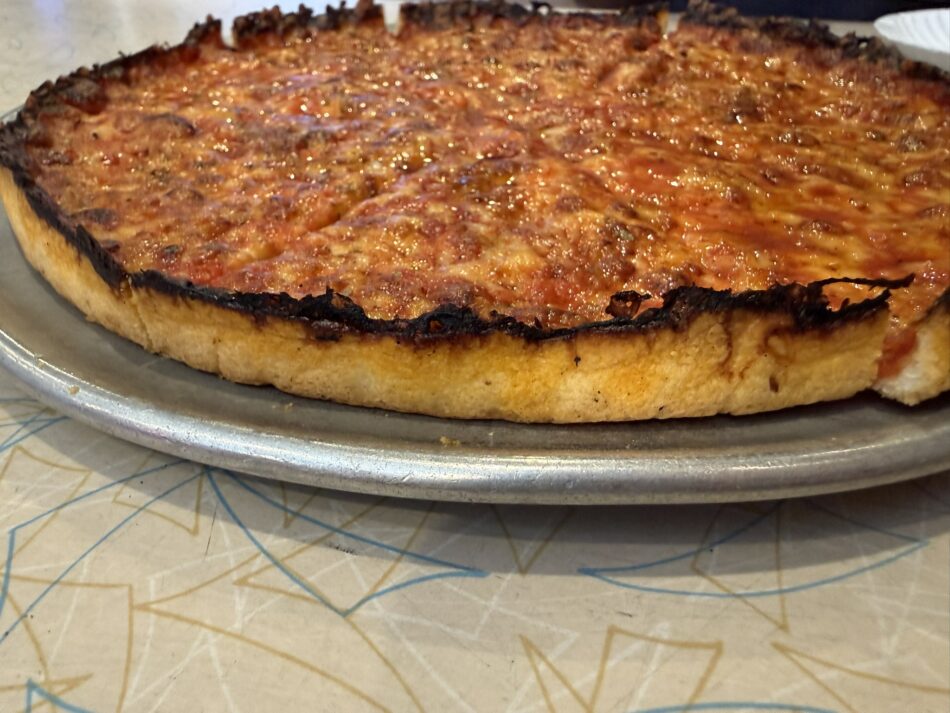
Notably, this pizza, invented by a Greek American a few years before Greek pizza was supposedly introduced in 1952 in New London, CT, is topped with at least some cheddar in the blend, putting it more in line with those later puffy pies than with a traditional Italian American pizza like the ones being sold in the North End at mainstays like Regina. Greek pizza is also baked in an oiled pan rather than on the oven floor, another sign that this pizza developed in parallel with the more widely disseminated New England Greek style. While I’ve been able to track down some signs of bakeries in Connecticut that were making casual pizza-like squares topped with cheddar in the post-War era, there are no indications that anything like the pizza at Cape Cod was being made in Massachusetts at the time, making this a mysterious quirk in the history of Greek pizza without clear origin.
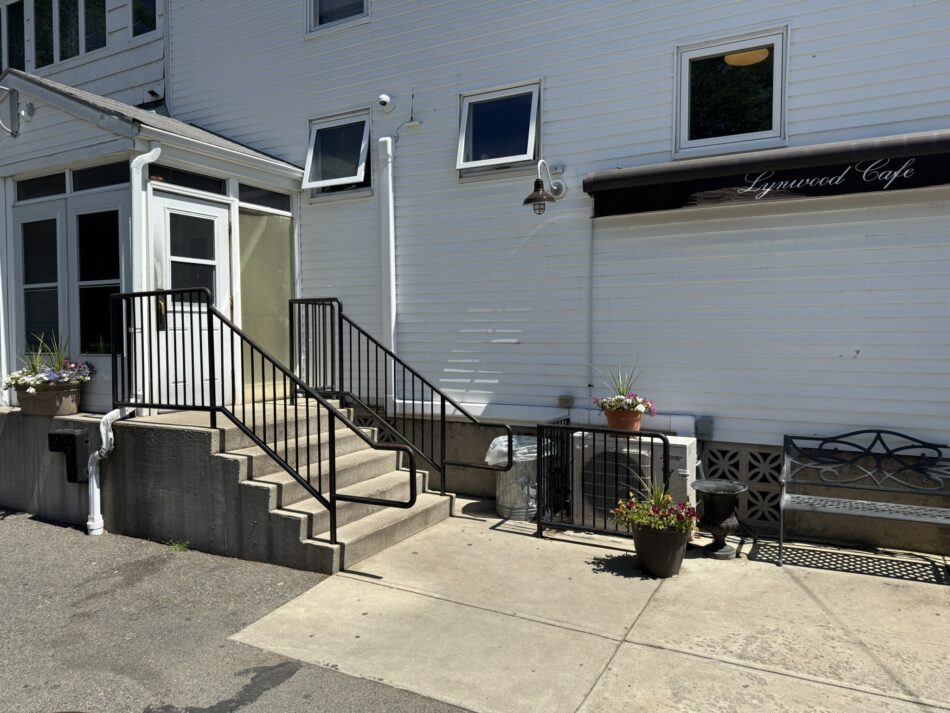
Lynwood went on a similar journey to the Cape Cod. Opened in the 1930s, the bar was transformed into a “cafe” in 1949, a few years after Jamoulis supposedly baked his first pie. Alfonse Skiermont, a Lithuanian immigrant, purchased the bar after moving to Brockton, and though it’s not clear exactly when the cafe started selling bar pizzas, at some point in the early years it became their specialty. Alphonse’s son-in-law Francis Kurlitis worked with him from the beginning and eventually purchased the restaurant in the late 1980s; he passed in 2016 at 93 as a legend in the Randolph community. It’s now run by Stephan and Pamela Campanella, his grandchildren.
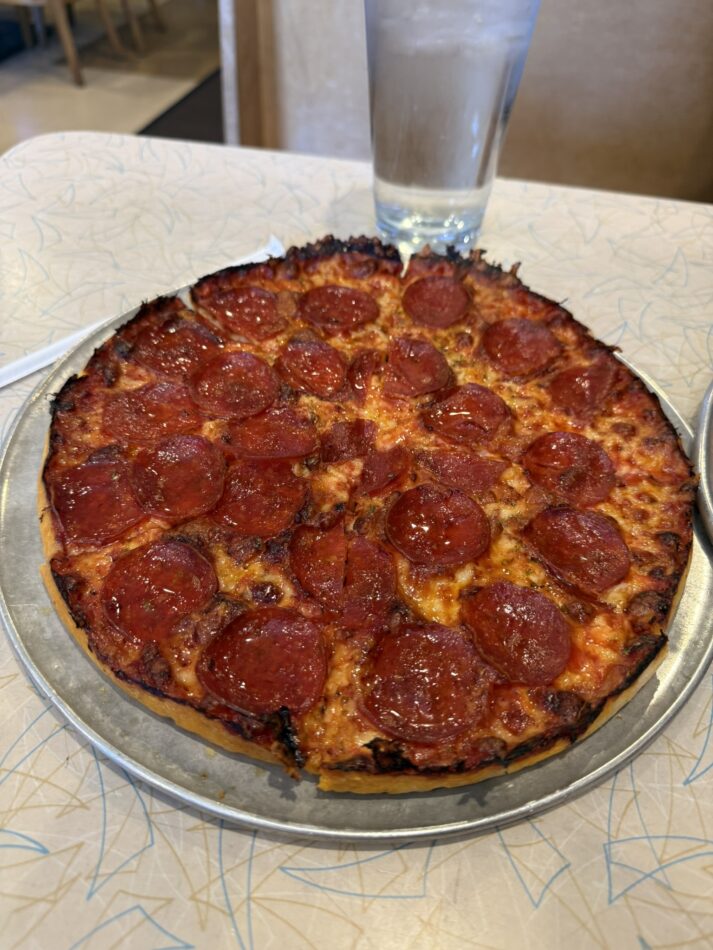
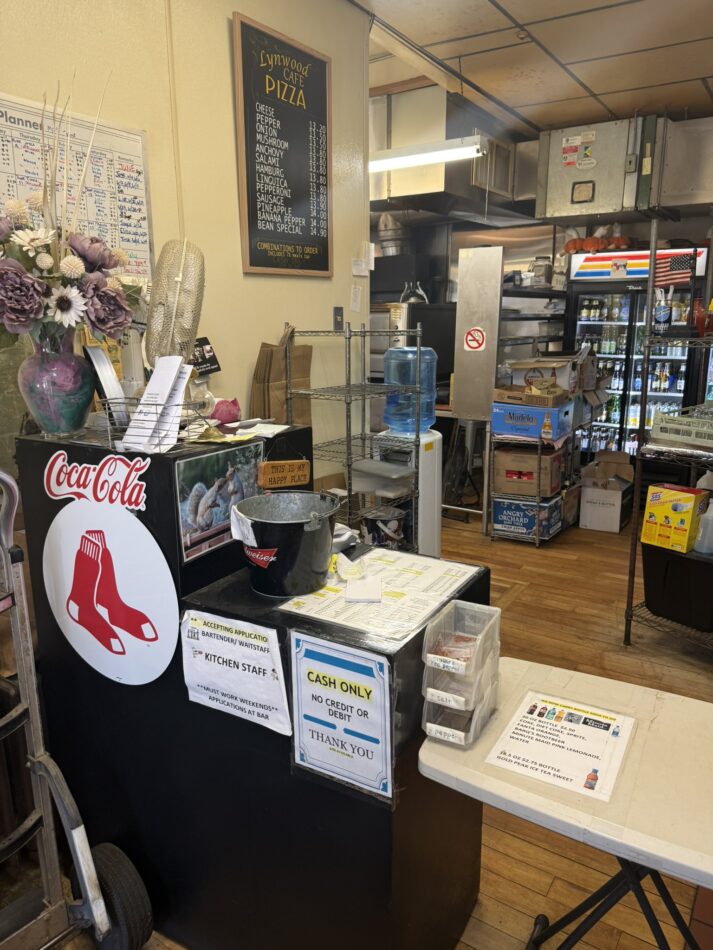
Not much has changed at Lynwood over the past eight decades. They installed an ATM a decade ago to help with their cash-only policy; more controversially they recently replaced their to-go square flat paper bags with standard pizza boxes, which some amateur chemists (and I assume at least one waitress at Town Spa) claim has ruined the quality of the takeout pies, which only adds to the cult-like belief system that dominates this hyper-partisan culture. ◼
Devra First on bar pizza in the Boston Globe
South Shore Bar Pizza Social Club
Everything South Shore Bar Pizza
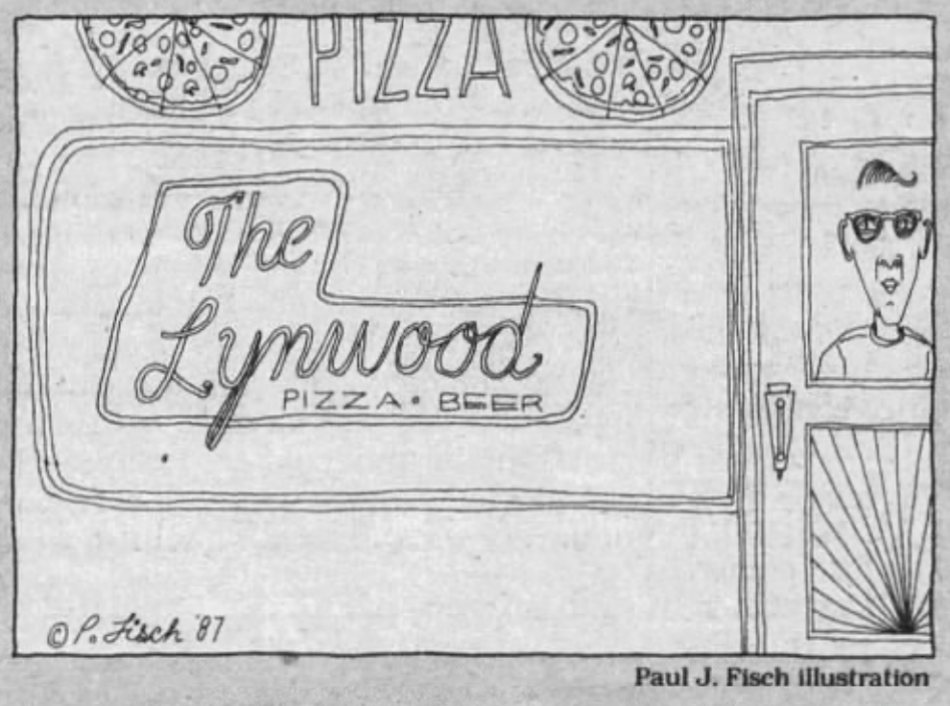
A sketch published with the first Boston Globe review of Lynwood Cafe from 1987
Things to know:
Cash only, ATM on site. Pizzas take at least 30 minutes, but you can call your order ahead, even if you want to eat there. Unlike some of the more accommodating bar pizza icons, there are no sandwiches and salads for the pizza-averse, so make sure to arrive with people who want pizza.
What to order:
Pepperoni, Bean Special, Pepper Onion Mushroom, always laced, you can also get them crispy if you want the bottom to be browned more, though this is not traditional.
Around town:
Randolph is home to another of the legendary old-school bar pizza spots in Hoey’s, which has been making pizza for nearly as long and now cooks out of a kitchen that was established in the 1970s inside an AMVETS club in the north part of town. Hoey’s is nearly as charming and possibly better than Lynwood; if you have enough people or appetite, making a day of it to compare the two is a great way to spend your time.