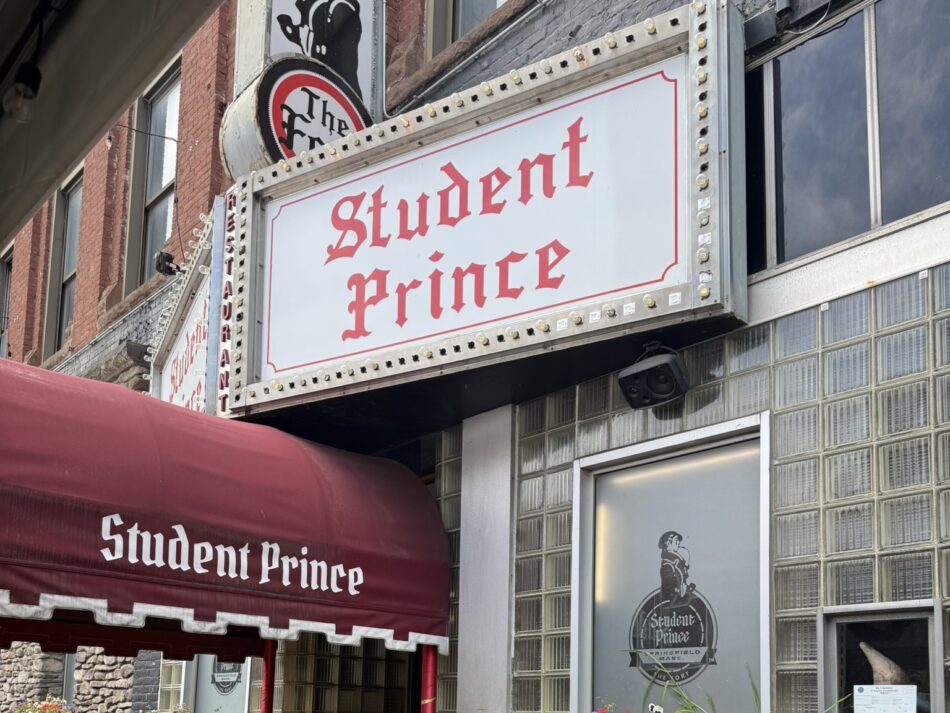
There is no clear reason why Student Prince Cafe in Springfield would exist. A German restaurant in a city with a marginal German-American population (though Dr. Seuss, a Springfield native, was of German descent), The Student Prince has been wedged into the Metro Center for nearly a century while waves of Italian, Greek, and Latino communities sprouted and took root around it.

The first half of its name is a reference to the now-obscure operetta The Student Prince, which was a smash hit of the 1920s and was performed annually at the Court Square Theatre a few blocks down in the decade before the restaurant opened in 1935; there is a nod to this in the marquee-style signage that tops the facade of the restaurant, as if luring unsuspecting theatergoers. “The Fort” in the second half of the name was added when the restaurant expanded in the 1940s, a tribute to a famous building that once stood on this site and had absolutely nothing to do with Germany, having been occupied by John Pynchon in the early years of Springfield history in the 17th century.
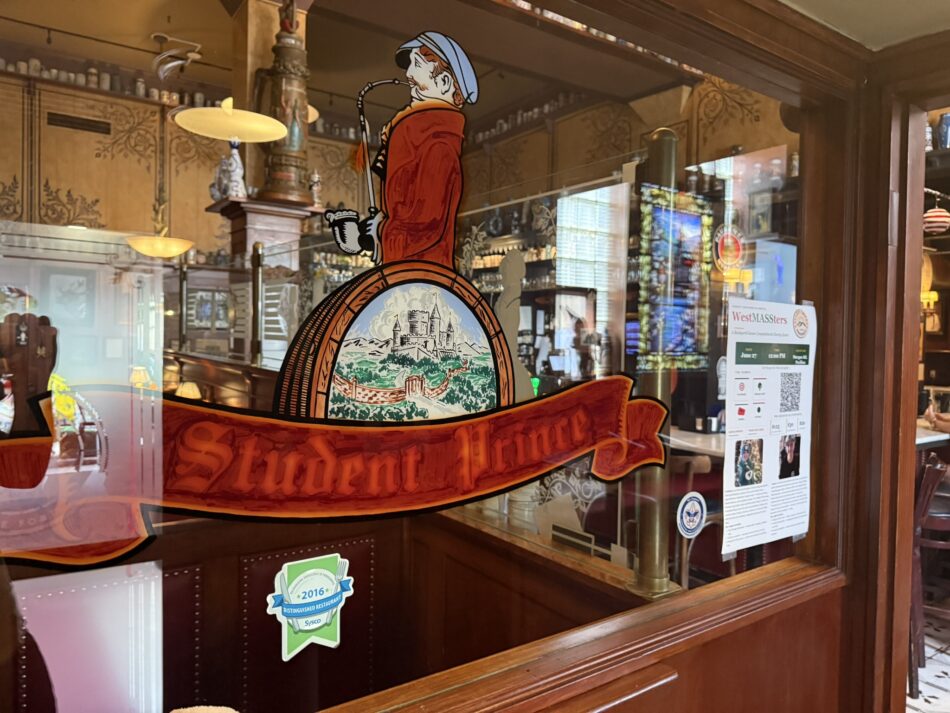
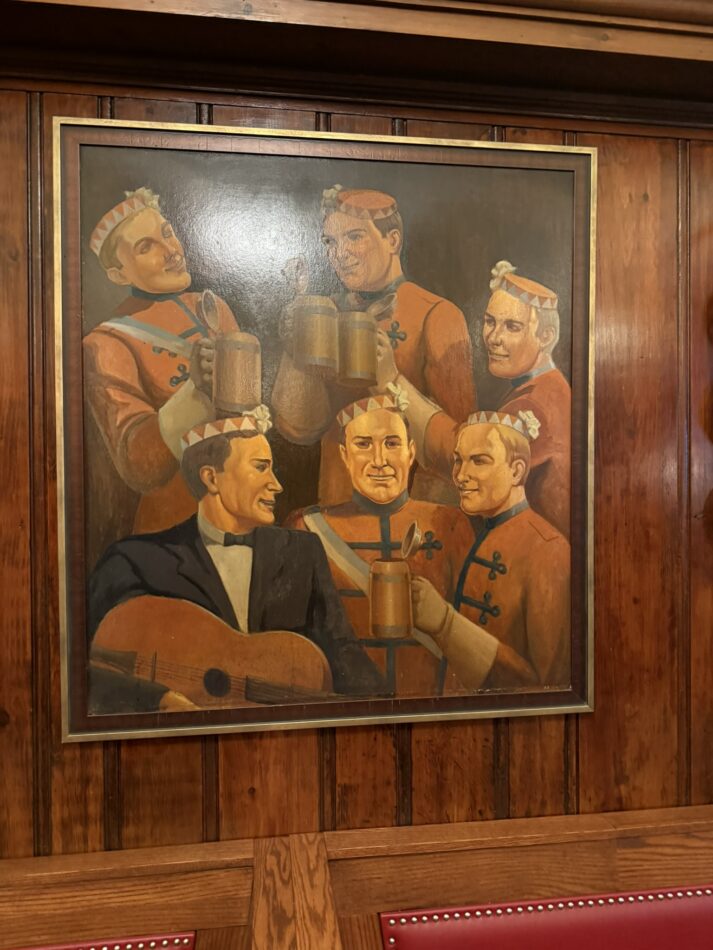
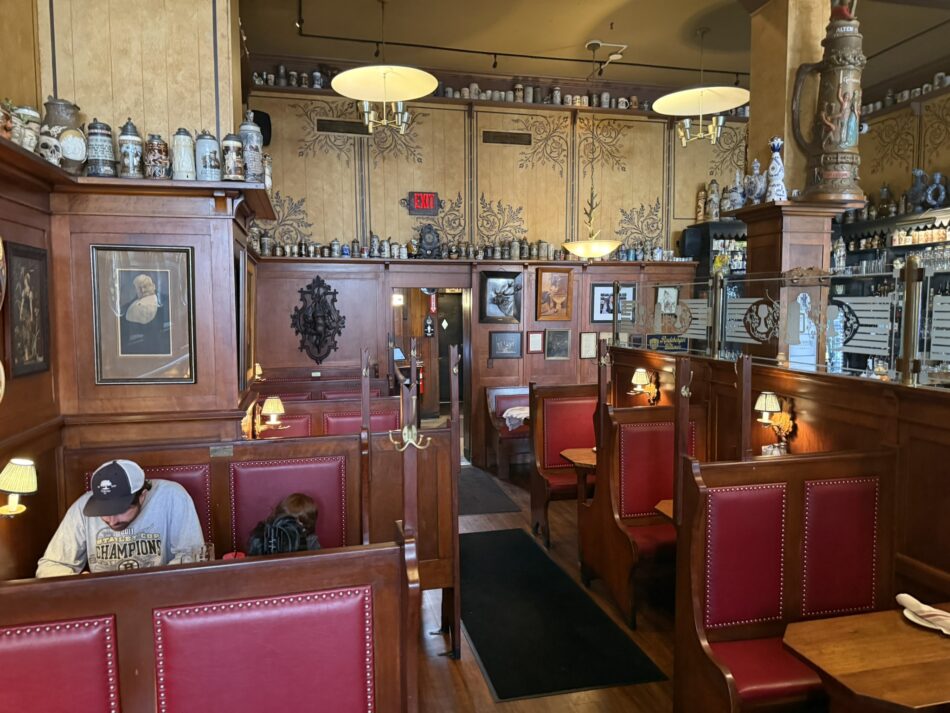
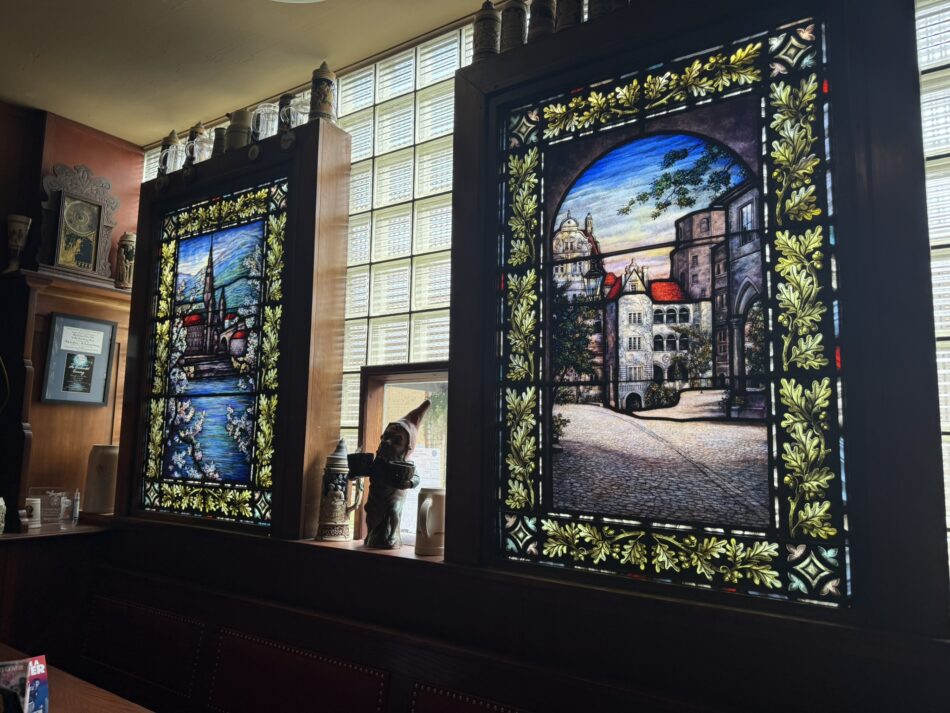
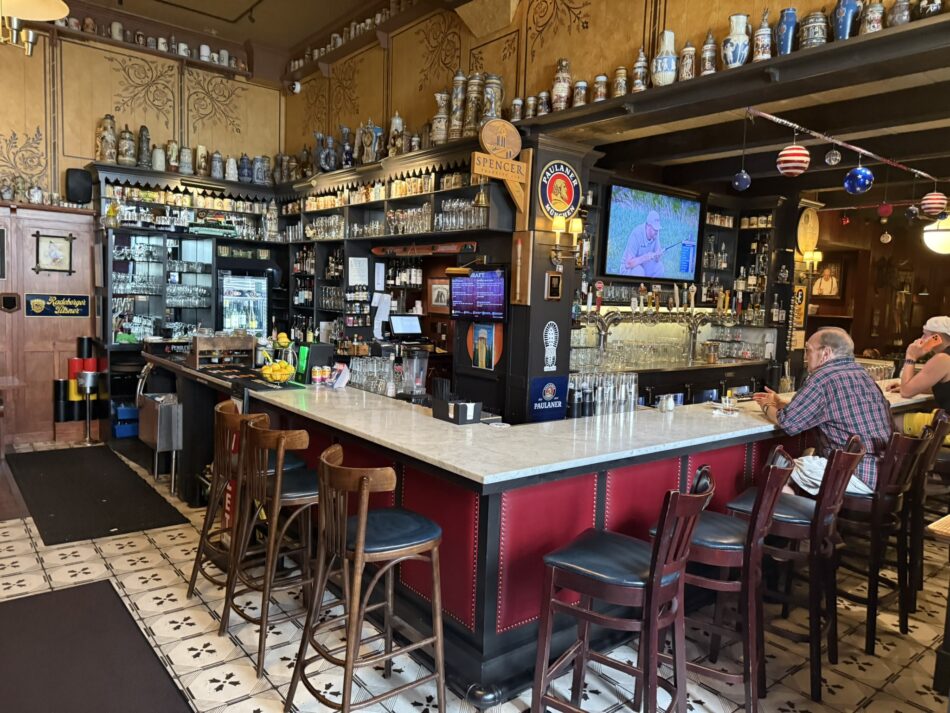
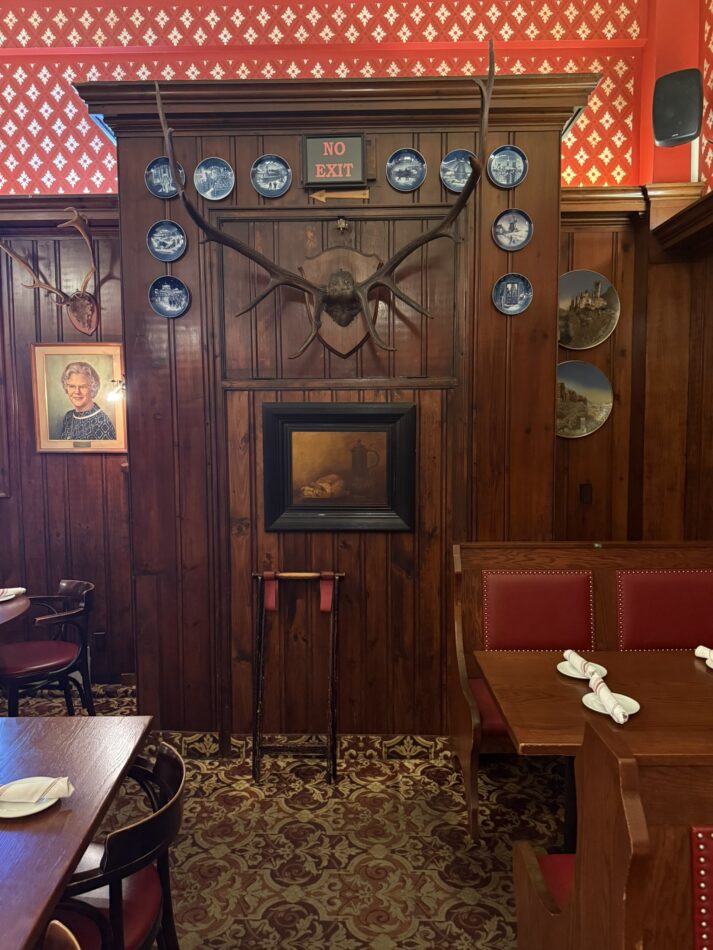
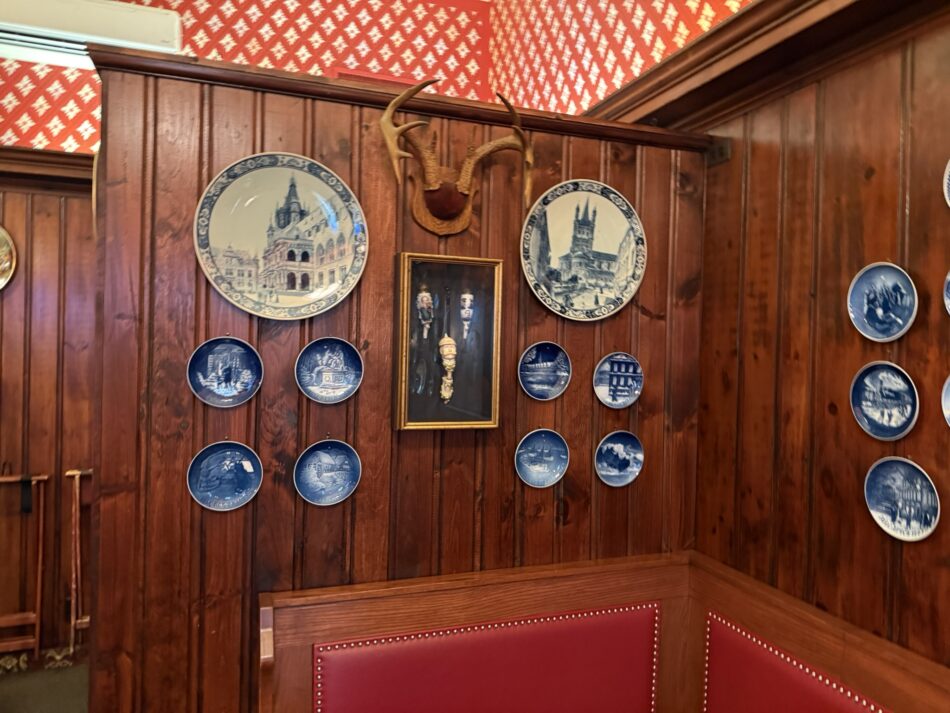
The interior is equally unlikely. Built over decades as the restaurant expanded into additional space on either end of its beginning footprint, The Student Prince feels both elegant and ramshackle, a fine-dining institution that doesn’t seem unreasonable as the setting for a casual lunch of a beer and a schnitzel. There’s something to admire and dwell on everywhere, from its wood-paneled and painted walls, carved booths, and stained glass depicting German scenes to collections of bottle openers, antlers, and various commemorative plates that spread out across dining rooms, the bar, and additional banquet rooms.


Most impressively, a collection of beer steins runs along shelves above the wood and near the ceiling; it’s supposedly the largest of its kind in North America, and is valued at over $2 million dollars. Each stein is distinct, varying in size, shape, materials, and era. There are skulls and cats, beautiful molded porcelain and metal, thimbles for a small nip and a giant pitcher that could satisfy an army squad. They fill nooks and crannies wherever you look, and the final effect is one of profound awe in the face of how long it must have taken to amass such a collection to populate a restaurant, that most temporal of places.
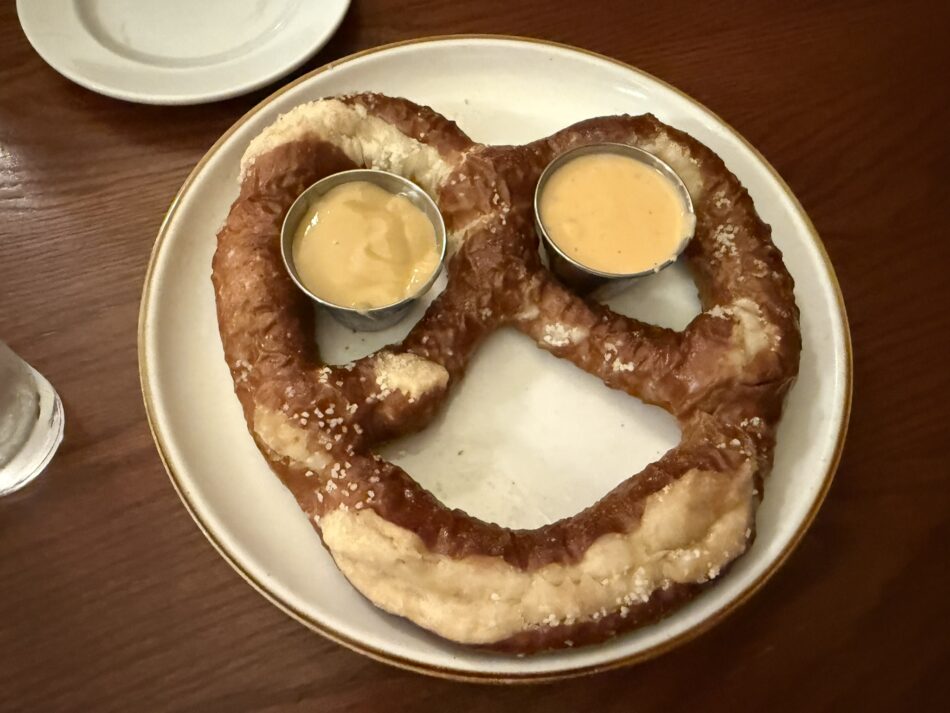
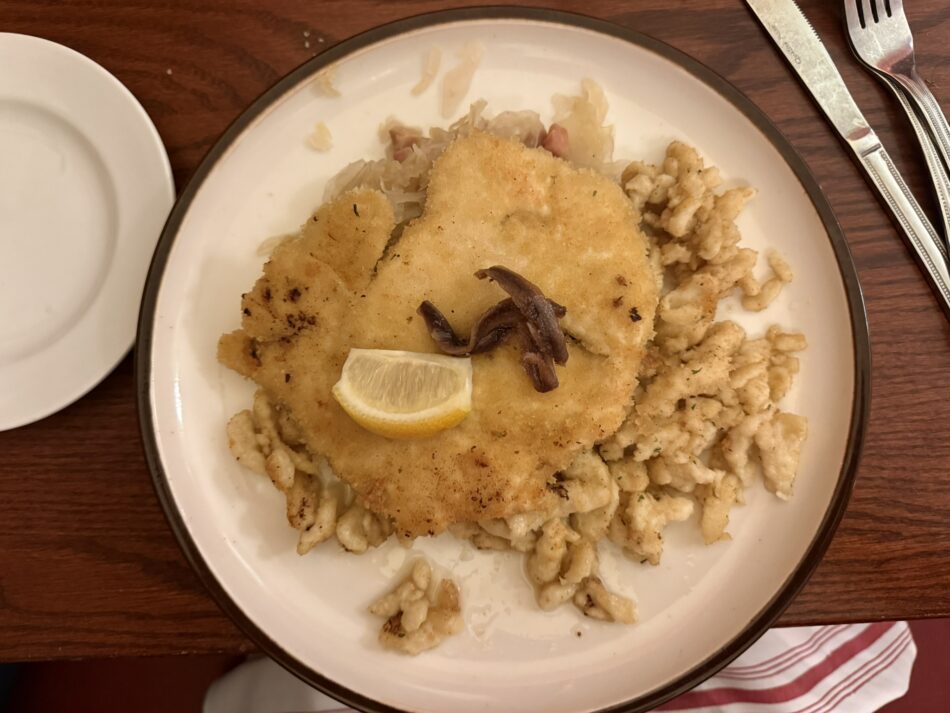
Aficionados of the atmosphere will be rewarded by the food as well. While the lunch menu stretches into more conventional pub fare like tuna melts and modern dishes like truffled fries and a Caesar salad wrap, the heart of the list is the schnitzels, which can be made with chicken, pork, or veal. The paprika schnitzel, served with housemade spätzle and a cucumber salad, is especially good, though this means you would miss out on the excellent sweet and sour red cabbage that comes with the classic schnitzel or the wurst plate, which features three kinds of housemade sausage accompanied by sauerkraut and red cabbage along with whole grain mustard. Best to bring a friend or two, then, who will also come in handy (or become dueling enemies) as you tear pieces of the soft and warm housemade pretzel from its hook (or plate if they’re out) and dunk it in honey mustard or melted cheese.
At dinner, the menu expands (as do prices) to include braised shanks, Kassler Rippchen (smoked pork chops), and larger plates of schnitzel and sausages. As would be expected by the German lineage and huge collection of steins, the Student Prince features a broad lineup of German beers on tap, plus a solid selection of New England and other American options that, like the modern American bar food offerings, should be promptly ignored in this setting.
The final improbability of the restaurant’s existence came in 2014, when it closed after years of declining revenue. Local investors (including the owner of the regional Peter Pan bus line) swooped in, negotiating a deal with the former owners to transfer ownership of the restaurant – and lease the stein collection and other artifacts for $100 a year. This shrine to German food and drink would survive, on the site of the only building that survived 1675’s Siege of Springfield in a city that has seen booms and busts throughout its nearly four hundred years, a quarter of which have included the Student Prince. The unlikely history only underscores the singular nature of the restaurant that is apparent as you step inside. There may be no reason The Student Prince is as magical as it is, but when you’re there you don’t need one. ■
About Student Prince Cafe and the Fort
The Student Prince is significant enough to have its own Wikipedia page, so writing a history of it here seems superfluous. If you’d like to delve further you can click through, but the short of it is that the restaurant was established in 1935 by a German immigrant named Paul Schoeder. He named it after the opera The Student Prince, which was hugely popular in Springfield at the time, and the success of the small restaurant allowed them to expand into a large dining room in the 1940s. The restaurant was given to its managing team in 1961, including Rupprecht Scherff, who ran the restaurant until 1996. Scherff’s son finally had to close the restaurant in 2014, but fortunately it was saved and renovated. It’s been run by the Bean Group of restaurants ever since.
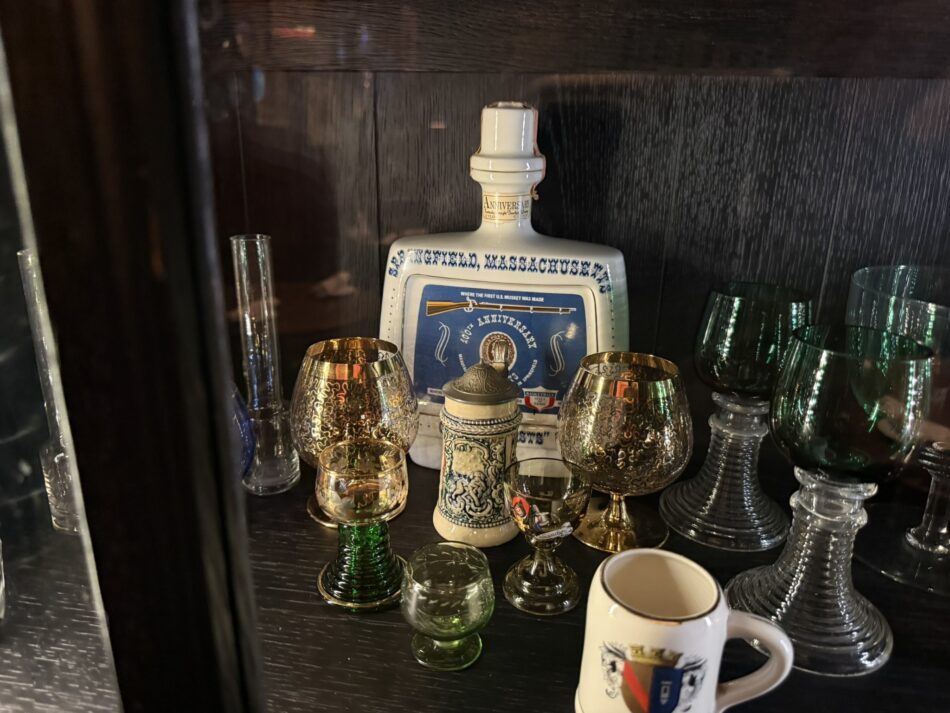
The operetta The Student Prince is based on a German play that was also made into a film by Ernst Lubitsch in the silent era. The operetta was a smash success on Broadway, surpassing even Showboat as the most-performed Broadway play of the 1920s. The music had a resurgence in the 1950s when a musical adaptation was produced by MGM with Mario Lanza recording the songs (which were lipsynced by Edmund Perdum in the film). The soundtrack was a huge success, and a copy of it is displayed in a case at the restaurant behind more drinking vessels.

A former employee of the Student Prince, also a German immigrant, opened Munich Haus in Chicopee, just north of Springfield, in 2004 with his son. Munich Haus is a less idiosyncratic and consequently more authentic look at a German restaurant and it’s massive, encompassing a bar, restaurant, banquet hall, and biergarten. Between the two restaurants, this area of Massachusetts makes a great case for being the center of German food culture in the Commonwealth. ■
Mass Live article about the transfer of the restaurant
The official Student Prince site
Things to know:
The Student Prince added an outdoor patio in their narrow driveway in front during Covid that has remained in the warmer months, but if you want the full experience you need to be inside. There are two rooms that are top picks. The center room you enter into is the core space, lined with booths on the left and a bar on the right that wraps around into an extended area that is more bar-oriented and modern. On the left is a dining room that is decked out with antlers and more stained glass, an admirable pick if you are with a bigger group or if the booths are not available.
What to order:
Paprika and classic schnitzel, especially pork, giant German pretzel, wurst plate, pork shank (dinner only), goulash, German beer
Around town:
A stone’s throw from Student Prince is Theodores’ Blues Booze and BBQ, a restaurant and blues club that has been proudly representing blues in the city that birthed Taj Mahal since 1979. Keep walking and you’ll hit Springfield’s jackpot of art and history museums, including the Amazing World of Dr. Seuss Museum. Or if you prefer cannoli to green eggs and ham, go a little further south along the Connecticut River and you’ll hit the MGM casino before arriving in the old Italian section of Springfield, which has held on with some excellent stops even as the children of many Italian immigrants have moved to surrounding suburbs, and finally the Naismith Basketball Hall of Fame (the sport was invented in Springfield).